esra günlü kılıç
UX strategy • usability engineering • systems thinking

Set-top-box concepts


Sector
Project:
Duration
Consumer electronics
A selection of set-top-box projects done at Vestel Electronics
5+ years
Role
Scope
Senior Product Designer - Industrial design
Between 2010 and 2015, I designed a large number of consumer electronics products while working at the Vestel Electronics R&D Center. A significant portion of these were set-top box projects. As the lead designer responsible for Vestel's entire set-top box design portfolio, I worked in close collaboration with the mechanical design and production teams. Several of these designs went on to receive international awards.
The electronic box is one of the most difficult fields in industrial product design, given its minimal opportunities for differentiation, requiring a high level of exploration and creativity to achieve a distinctive product identity. You can find a selection of my electronic box designs below.
Totem femtocell


Femtocell STBs are small cellular base stations (or "personal cell towers") that can also function as a hub for information exchange between electronic devices. They create a full-strength, in-building cellular signal that boosts mobile device coverage and battery life. The Totem femtocell box was designed in 2011 and went into production in 2012 at Vestel. It drew attention for its minimalist and functional design, addressing several different needs at once, and won the Good Design Award in 2011, followed by a nomination for the German Design Award in 2013. After production, it also achieved market success and was sold to various OEM brands in different color versions.
Aesthetic Integration: Totem is an indoor femtocell STB designed for home and office use. Its free-standing shape, with neat, refined details, conceptually identifies it as a "totem", dominating other electronic devices as a central connecting presence. The device was designed to resemble a piece of modern, minimalist home decor, such as a sleek router, smart speaker, or digital clock, rather than a clunky, utilitarian piece of hardware.
Vertical (Double-Sided) Orientation: The name "Totem" references its upright, pillar-like silhouette, which allows it to sit elegantly on a bookshelf, entertainment center, or, crucially for femtocells, a windowsill. The vertical form factor was also purposefully crafted to house and orient internal antennas more effectively. Femtocells often require a strong line of sight to a window to acquire a reliable GPS lock, and this tall footprint allows for optimal internal component spacing. Thanks to this design, the product can also be oriented horizontally, suiting a variety of possible spaces.
LED Status Indicators: The casing incorporates subtle, diffused LED lighting to communicate connection status (e.g., broadband connected, GPS locked, cellular active) without being visually obtrusive in a dark room.
Soul femtocell


Soul was an alternative design to the Totem femtocell, which was not put into production but still gathered positive feedback from a variety of audiences. Similar to Totem, its sleek, vertical design reinforced its identity as a central station within a home or office environment. Unlike Totem, however, it featured a separate stand piece that followed the pebble-style form of the box itself. This pebble style was one of the prevailing trends among electronic products at the time. Compared to Soul, Totem, with its more functional and self-standing attributes, was ultimately selected by customers for production.
Cubic box concept
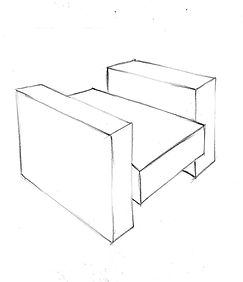


Prototypes of cubic boxes

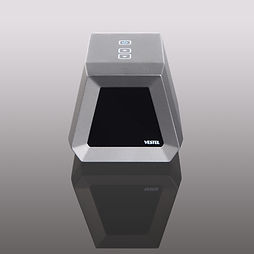


In early 2010s, cubic style became a trend in electronic box product design. During the time I also explored several form factors for a variety of box types.
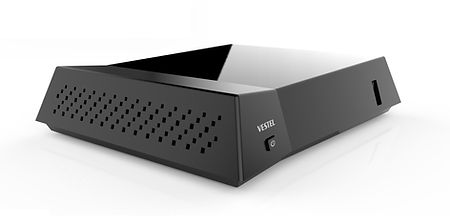
The cubic designs, however, were not ideal for the types of products we were producing, considering their use scenarios. Additionally, heat dissipation was a critical problem, especially for DVB set-top boxes, our biggest product group, which carried high-end technological features. In the end, this exploration turned more into a form factor exercise, one that later resulted in standard rectangular prism boxes, such as media players and DVB boxes, inspired by these earlier studies. Starting from the cubic style, new and interesting form factors were created for this otherwise difficult product group, and they went on to become successful in the market. Some of them were awarded the Good Design Award, as well as additional Plus X Design Awards in the "Design" and "Innovation" categories. One design, named Chopin, received the "Best design of the year 2015" award. You can find some samples of these boxes below.
Designs inspired from cubic concepts


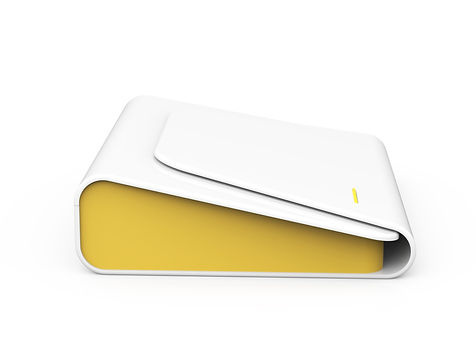
Wrap and wave modems


As one of the more interesting types of set-top box projects, I designed HSU and SFU optical network modems. The placement of the card and its components, including the antennas, was a critical topic for this type of product. As these boxes were mostly mounted on walls or in higher, visible areas, they were highly visible products, but typically only checked specifically when a problem occurred. Because of this, their LED lights and antennas needed to remain clearly visible without requiring anyone to approach the device.
I aimed to create two different identity options to address different expectations: one quite minimalist, and another more stylistic. Both ended up being among my better-received designs.
Rolls hybrid set top box



As a very unusual form factor and identity, reflecting functionality, a high-end character, and a sophisticated minimalism together, I designed Rolls in 2016 as a hybrid set-top box that allowed users to access new reception methods without needing to replace their existing TV set. Alongside a digital receiver for standard TV signals, Rolls also served as a gateway into the world of IP connectivity, making signal sources available from the home network or the internet accessible, even on TVs that lacked a network connection or a receiver for newer broadcast standards.
The product was also designed to look and behave differently from a typical set-top box. A single, visible LED served as its only control element, a deliberate statement that the entire experience relied on the on-screen menu of the TV itself, rather than on physical buttons on the device.
The VESTEL Rolls set-top box earned the Plus X Award for "Best Product of the Year". Recognized for its space-age design, this premium device was specifically honored by the international jury in the categories of High Quality, Design, and Functionality.
As a very unusual form factor and identity, reflecting functionality, a high-end character, and a sophisticated minimalism together, I designed Rolls in 2016 as a hybrid set-top box that allowed users to access new reception methods without needing to replace their existing TV set. Alongside a digital receiver for standard TV signals, Rolls also served as a gateway into the world of IP connectivity, making signal sources available from the home network or the internet accessible, even on TVs that lacked a network connection or a receiver for newer broadcast standards.
The product was also designed to look and behave differently from a typical set-top box. A single, visible LED served as its only control element, a deliberate statement that the entire experience relied on the on-screen menu of the TV itself, rather than on physical buttons on the device.
The VESTEL Rolls set-top box earned the Plus X Award for "Best Product of the Year". Recognized for its space-age design, this premium device was specifically honored by the international jury in the categories of High Quality, Design, and Functionality.